

 English
 русский
 Français
 Español
 عربى
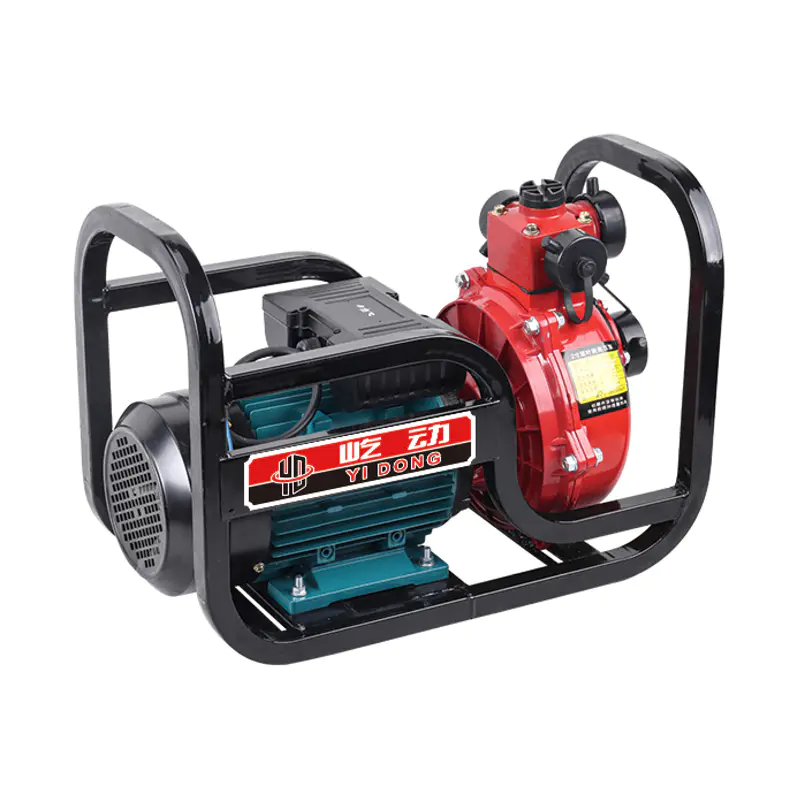
A 220v Agriculture Irrigation Water Pump does both jobs, on different sides of the impeller. At the inlet it does not pull water at all, because the atmosphere pushes the water in. At the outlet, the spinning impeller pushes the water into the pipe. Air at sea level can balance a column of water about 10.3 m tall, since 101,325 Pa divided by the product of water density and gravity (1,000 kg/m³ × 9.81 m/s²) gives 10.33 m. Friction and vapour pressure cut the usable figure well below that, and the 2/3/4 inch pumps in the Angteng range are rated for a maximum suction lift of 8 meters.
The Air Pushes Water to the Inlet

When the impeller turns, it clears air from the casing and lowers the pressure in the suction pipe. The weight of the air on the water surface then presses water up the pipe toward the pump. A 220v Agriculture Irrigation Water Pump is self-priming, so the casing keeps a reserve of water that helps expel air from the suction line, and the pump can restart without being refilled each time.
The Impeller Does the Pushing
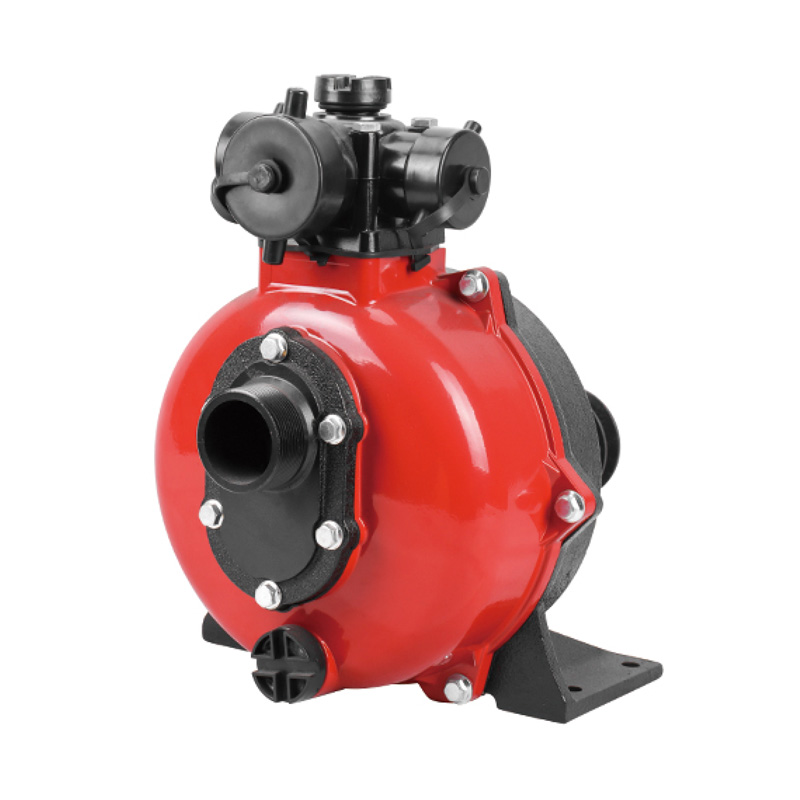
The pump is a direct motor, single-stage centrifugal design. The motor shaft carries the impeller at 2800 r/min, with no belt between them. Water enters at the eye of the impeller, the vanes throw it outward, and the volute guides it into the discharge pipe. The three pump heads share the same 3.0 kW motor on 220V, and differ in the size of the ports.
|
Question |
What decides it |
|
How far water can be drawn in |
Air pressure and a tight suction pipe |
|
How much water per hour |
Port size and impeller width |
|
How high water is delivered |
Impeller speed and diameter |
|
How the pump restarts |
Water held in the casing |
Keeping the Suction Side Tight
The push from the atmosphere works only while the suction line is sealed. A loose joint lets air in and the water column breaks. A 220v Agriculture Water Pump is therefore set close to the water, with a short, straight suction pipe at least as wide as the pump inlet, which is 50, 80 and 100 mm on the 2, 3 and 4 inch heads. A strainer at the foot of the pipe keeps stones and debris out of the impeller.
Where the Pull Ends
Rivers, lakes, ponds and shallow wells within the suction limit suit this kind of pump, because the water can be reached from the surface. Where the water lies deeper than that, a submersible takes over, since a surface pump cannot draw from below the limit set by the air.
Three figures describe the job: the height from the water surface to the pump, the height from the pump to the field, and the length of the pipe run. A 220v Agriculture Irrigation Water Pump from Zhejiang Taizhou Angteng Electromechanical is matched to a site once those three figures are known.