

 English
 русский
 Français
 Español
 عربى
عربىA gasoline engine powering a water pump does not work independently of the equipment it drives. The pump's required flow, delivery head, and operating conditions determine how much mechanical power the complete unit needs. For buyers sourcing a GX200 168F engine for pump assemblies, evaluating the engine and pump as a matched power system is more useful than considering engine output in isolation.
This relationship matters to agricultural equipment manufacturers, pump distributors, and businesses supplying portable water-moving equipment. A suitable combination must meet the intended pumping requirements while operating within the engine manufacturer's specified conditions.
Pump Head Changes the Power Required for Water Delivery
Water pumps operate against resistance created by elevation, pipe length, fittings, and the receiving system. As these conditions change, the pump's operating point can change as well. A pump intended to move water across a relatively short distance may face different demands when the delivery route includes a higher elevation or a longer pipeline.
Flow rate and head therefore need to be evaluated together. A high advertised flow figure does not necessarily describe performance under every installation condition. Buyers should review the pump's performance data at the expected operating head instead of treating maximum flow as a guaranteed result for all applications.
When selecting a GX200 168F engine for a pump package, equipment manufacturers should establish the required duty point first. This gives the engineering team a defined basis for checking whether the proposed engine and pump combination can meet the intended water-delivery requirements.
Engine Output Must Match the Complete Pump Assembly
The engine supplies mechanical power, while the pump converts that power into hydraulic work. Some power is also lost through mechanical and hydraulic inefficiencies. Consequently, the engine's rated output should not be treated as equivalent to the useful power delivered to the water.
Pump selection needs to account for the expected operating point and the power demand associated with it. The engine's available output at the intended operating speed must then be checked against that demand, including an appropriate allowance for operating conditions and the manufacturer's recommendations.
For buyers evaluating a GX200 168F engine, the model designation alone does not establish the output available in a particular configuration. The confirmed engine specifications and the pump's performance requirements should be reviewed together. If the intended duty exceeds the available power, the complete unit may fail to deliver the expected performance or may operate outside its recommended conditions.
Operating Speed Influences Pump Performance
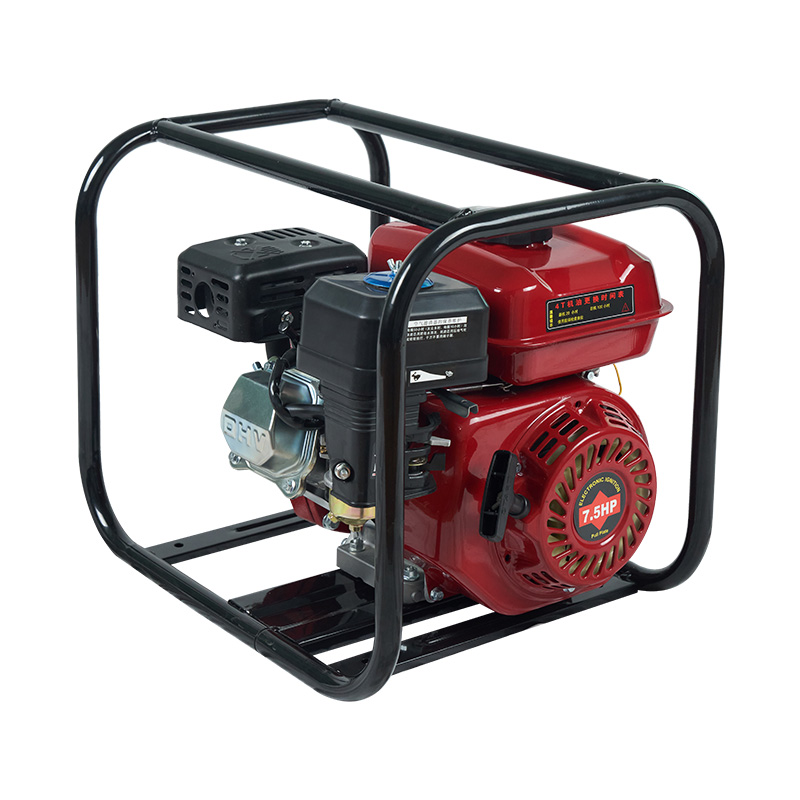
A pump's performance depends partly on its rotational speed. Changing speed can affect flow, head, and power demand, although the exact relationship depends on the pump type and operating conditions. Engine speed must therefore be considered alongside the pump's performance curve and the manufacturer's operating limits.
A matching process should not assume that increasing engine speed is a universal way to improve water delivery. Running outside the approved range can create mechanical and thermal risks, while a speed change may alter the pump's power requirement. The engine, drive arrangement, and pump must be evaluated as a complete assembly.
When specifying a GX200 168F engine for equipment production, buyers should confirm the rated operating speed and the intended drive configuration with the manufacturer. This is particularly relevant when comparing different pump models or adapting an existing machine to a different water-delivery requirement.
Suction Conditions Also Affect Real-World Results
Even when engine output and pump capacity appear suitable, poor suction conditions can prevent the equipment from reaching its expected performance. Excessive suction lift, air entering the suction line, restricted inlet flow, or an incorrectly prepared pump can interfere with water delivery.
These issues should be distinguished from an engine power problem. If a pump fails to deliver the expected flow, checking the suction line, inlet restrictions, priming requirements, and operating head can help identify whether the limitation comes from the hydraulic system rather than the engine itself.
For a GX200 168F engine used in a water-pump assembly, documenting the intended suction lift, delivery head, and pipe arrangement helps clarify the actual working conditions. This information is useful when evaluating performance expectations and investigating differences between test results and field operation.
Validate the Engine and Pump as One Unit
A component-level specification cannot fully describe how a completed pump set will perform. Equipment manufacturers should verify the engine model, rated output, operating speed, drive interface, and pump performance data before finalizing a configuration. The assembled unit should then be evaluated under representative operating conditions.
Testing should record measurable results such as flow rate, delivery head, engine operating speed, and any relevant signs of unstable operation. Comparing these results with the required duty point provides a more meaningful assessment than relying on an engine name or a pump's maximum advertised capacity alone.
When purchasing a GX200 168F engine for repeated production, keeping the approved engine and pump combination documented helps maintain consistency between equipment batches. If the pump model, pipe arrangement, or required duty changes, the combination should be reviewed again rather than assumed to perform identically.
The practical goal is to match available engine power with the pump's actual workload. For manufacturers and distributors, this system-level approach provides a clearer basis for evaluating performance, preparing product configurations, and setting realistic expectations for water-pumping equipment.