

 English
 русский
 Français
 Español
 عربى
عربىMoving water is only half the job for a Gasoline Engine Water Pump working a field irrigation site; getting the pump casing filled with water before the engine ever engages is the step that happens beforehand, since these pumps normally sit above the water source rather than submerged in it. How quickly and reliably that priming step happens shapes the actual field experience of the equipment far more than the headline horsepower or flow-rate figure printed on the box.
Self-Priming Design Decides How Quickly The Pump Gets To Work
A self-priming Gasoline Engine Water Pump uses a venturi effect inside the pump casing to draw air out and pull water up through the suction line without a separate manual fill step every time the source water level drops. Impeller design and casing geometry both influence how many seconds of priming time a given model needs before it reaches full flow, and that gap matters directly on a job where the water source is a shifting pond edge or an irrigation ditch rather than a fixed, always-full tank. Getting the priming chamber volume and impeller clearance right during development is what keeps that startup window short and predictable across different suction lift heights, whether the pump is drawing from a shallow irrigation ditch or a well set several meters below the surface.
Shaft Coupling To The Engine Affects Seal Life
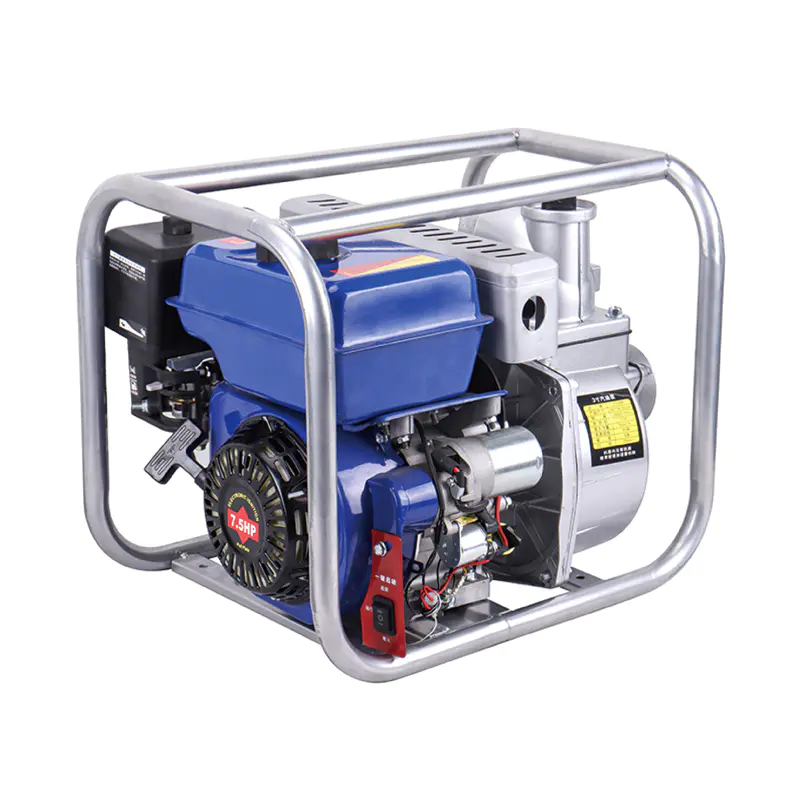
Unlike an electric pump built around a sealed motor shaft, a Gasoline Engine Water Pump couples an internal combustion engine directly to the pump's drive shaft, and any vibration or slight misalignment at that coupling transfers straight into the mechanical seal keeping water out of the engine side of the assembly. Engine mounting rigidity and shaft alignment tolerance during assembly determine how much of that vibration actually reaches the seal face over the life of the pump, since a seal running against a shaft that wobbles even slightly wears unevenly compared with one running true. Coupling design gets more attention on double-impeller models specifically, where the added stage puts more axial load on the same shaft and seal assembly, making alignment tolerance during assembly a bigger factor in how long that seal lasts under continuous field use.
Fuel Tank Capacity Sets How Long A Job Runs Unattended
Field irrigation and drainage jobs often run for hours without anyone standing next to the equipment, which makes fuel tank size on a Gasoline Engine Water Pump a practical spec rather than a minor detail. A larger tank extends unattended run time on a remote field with no easy refueling access, at the cost of added weight on equipment that still needs to be carried or wheeled into position by hand in many agricultural settings. Matching tank capacity to the realistic run time a job requires, rather than defaulting to the largest tank available, keeps the pump sized appropriately for how it actually gets used in the field.
Priming speed, shaft and seal durability, and fuel tank sizing all shape how a Gasoline Engine Water Pump performs on an actual job site, well beyond the flow rate and pressure figures that usually headline a spec comparison.