

 English
 русский
 Français
 Español
 عربى
عربىDistributors sourcing a copper wire silent diesel generator for the initial time often focus vetting attention on horsepower and fuel tank size, while the two features named directly in the product category — the copper winding and the noise-reducing construction — get comparatively little scrutiny during supplier comparison.
Does the Supplier Confirm Actual Copper Content, Not Just a Copper Label?
Copper winding alternator construction improves electrical conductivity and heat tolerance compared to aluminum winding, but some suppliers use copper-clad aluminum wire that carries a "copper" description while delivering meaningfully different conductivity and heat performance than solid copper winding. Buyers vetting a copper wire silent diesel generator supplier should ask for the actual wire composition specification rather than accepting a general "copper" claim, since this distinction affects voltage stability and long-term winding durability under continuous industrial use.
Is the Noise Rating Measured Under Realistic Load Conditions?
Noise figures for a copper wire silent diesel generator are frequently measured at idle or light load in a supplier's specification sheet, conditions that don't reflect the noise output a buyer's end customer will actually experience running the generator under typical working load. Buyers should ask specifically whether published noise ratings were measured at rated load and at what distance, since a generator quiet at idle can produce noticeably more noise once the engine is working under its actual rated output.
|
Vetting Question |
What a Reliable Supplier Should Confirm |
|
Winding material composition |
Solid copper specification, not copper-clad substitute |
|
Noise rating test conditions |
Measured at rated load, not just idle |
|
Voltage output across the model range |
Confirmed per kW tier from 3kW through 15kW |
|
Wheel and frame load rating |
Rated for the specific unit's transport weight |
Does the Model Range Maintain Consistent Voltage Output Across Power Tiers?
A copper wire silent diesel generator line spanning multiple power tiers — from smaller 3kW units through larger 15kW models — should maintain rated voltage output consistently at each tier's stated capacity, whether configured for 110V/230V at 60Hz or 220V/380V at 50Hz. Buyers standardizing an order across multiple power tiers for different customer applications should request tier-specific test data rather than assuming voltage stability validated at one power tier automatically extends across the full model range.
Is the Soundproof Enclosure Actually Reducing Noise or Just Adding Weight?
A soundproof generator enclosure needs internal sound-dampening material and vibration-isolating mounts to meaningfully reduce noise transmission, not simply an enclosed housing that adds weight without addressing the vibration and sound pathways that actually generate noise. Buyers should ask suppliers to specify what sound-dampening materials and mounting design are used inside the enclosure, since an enclosure built primarily for a finished appearance rather than acoustic performance can add cost and weight while delivering only marginal noise reduction.
Does Electric Start Reliability Hold Up Across the Full Voltage Range?
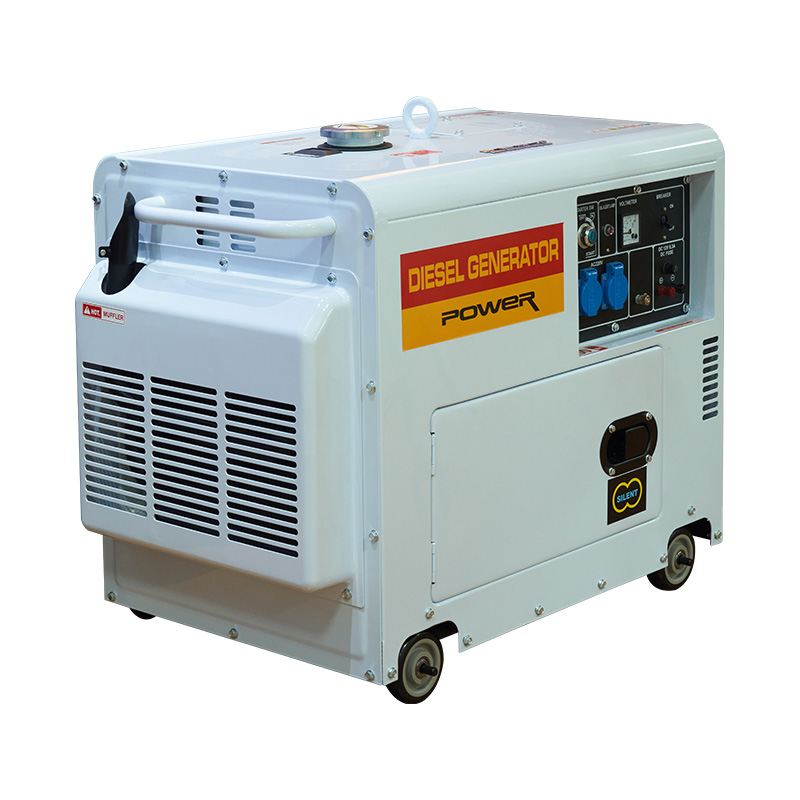
Electric start diesel generator reliability depends on battery and starter motor sizing matched appropriately to each engine size across a multi-tier product line, and a starter system validated on a smaller 3kW unit doesn't necessarily scale reliably to a 15kW model without adjustment. Buyers ordering across multiple power tiers should confirm that starter and battery sizing has been validated independently for each tier rather than assuming a single starter design was simply scaled proportionally across the whole range.
Are Wheels and Frame Rated for the Actual Transport Weight of Each Model
Wheeled generator mobility is only practical if the wheel and frame assembly is rated for the actual weight of the specific unit being moved, and a wheel assembly adequate for a lighter 3kW unit can fail or wear prematurely under the substantially heavier weight of a 12kW or 15kW model built on the same wheeled frame platform. Buyers sourcing larger units specifically for their wheeled mobility feature should confirm wheel and axle load ratings match the actual unit weight rather than assuming the wheeled design was scaled appropriately across every power tier in the lineup.
Does the Supplier Provide Load-Specific Fuel Consumption Data Across Tiers
A copper wire silent diesel generator buyer comparing a 5kW model against an 8kW model needs fuel consumption figures specific to each tier's typical operating load, since fuel efficiency doesn't scale linearly across a model range built around different engine displacements. Suppliers providing tier-specific consumption data measured at common load percentages — 50%, 75%, and full rated load — give buyers a more useful basis for matching a specific model to a customer's expected duty cycle than a single headline efficiency figure that may only reflect one tier in the lineup.
Can the Supplier Document Direct Fuel Injection Performance Under Variable Load
A copper wire silent diesel generator built with direct fuel injection delivers more consistent performance under variable load than an indirect injection system, since direct injection responds more precisely to sudden load changes without the momentary power dips that indirect systems can exhibit. Buyers supplying customers with fluctuating power demands — construction sites running intermittent power tools, for example — should ask whether direct injection performance has been validated specifically under variable load testing rather than only steady-state conditions, since steady-state figures don't reveal how the fuel system responds when load changes suddenly during actual operation.