

 English
 русский
 Français
 Español
 عربى
عربىAn agriculture petrol water pump is usually discussed in terms of flow rate, suction depth, or engine power. Yet on many farms, one of the most common daily tasks involving the pump has nothing to do with starting the engine.
It is moving the machine itself.
Walk through a farm during irrigation season and you may notice that the same pump rarely stays in one location for very long. It might begin the morning beside a reservoir, move to a field edge by noon, and end the day near another section of the property.
For people unfamiliar with agricultural work, this can seem inefficient. For experienced farmers, it is often part of managing water more effectively.
Water Demand Rarely Stays In One Place
An agriculture petrol water pump is frequently used in fields where irrigation requirements change throughout the growing season.
One area may need additional water after planting, while another section is already receiving enough moisture. Rather than building permanent infrastructure everywhere, many farms rely on portable pumping equipment that can be repositioned when needed.
Petrol-powered pumps are commonly used in locations where electrical access is unavailable, making portability an important part of their practical value.
As a result, the pump often travels to where the water demand exists rather than waiting for the water system to reach it.
Field Conditions Change Faster Than Equipment
A heavy rain can completely change an irrigation plan.
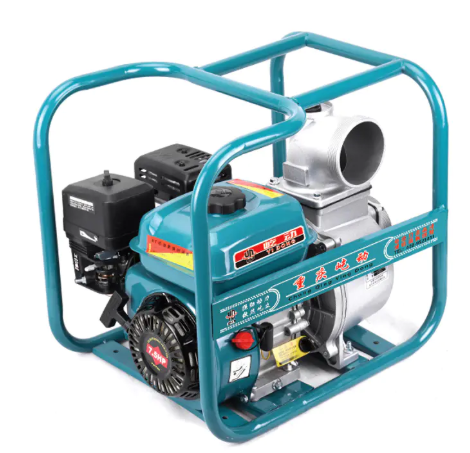
An agriculture petrol water pump that was being used to move water into a field one week may be helping remove excess water from another area a few days later. Farmers constantly adapt to weather, crop development, and water availability.
This flexibility is one reason portable engine-driven pumps remain common in agricultural applications. They can support irrigation, drainage, and water transfer without relying on fixed power sources.
The machine may stay the same, but the job often changes.
Hose Length Is Not Always The Best Solution
People sometimes assume a longer hose can solve every irrigation challenge.
In reality, farmers often prefer relocating an agriculture petrol water pump rather than extending hose runs indefinitely.
Longer distances can introduce additional pressure loss and make field management more complicated. Discussions among irrigation users frequently focus on balancing pump capacity, elevation changes, and pipeline length rather than simply increasing hose distance.
Moving the pump a short distance may sometimes simplify the entire irrigation setup.
Access Roads Influence Irrigation Planning
On many farms, irrigation planning involves more than water sources and crops.
Equipment access also matters.
An agriculture petrol water pump may need to reach ponds, canals, reservoirs, or temporary water storage areas located throughout the property. Farmers often consider vehicle access, ground conditions, and transportation routes when deciding where pumping operations will take place.
During wet seasons, some locations become difficult to reach. During dry periods, access improves and pumping locations may change again.
This is why pump placement often becomes part of broader field logistics.
Portability Is Part Of Daily Farm Management
Manufacturers frequently describe an agriculture petrol water pump as portable equipment, but portability means different things on a working farm.
It is not simply about carrying the machine.
It is about adapting to changing irrigation needs, shifting water sources, and seasonal field conditions. A pump that can be moved easily allows farmers to respond more quickly when conditions change.
Many agricultural water pumps are specifically designed for field use where electricity may not be available and mobility is important.
That is why experienced farmers often view portability as part of irrigation strategy rather than just a product feature.
The interesting thing about an agriculture petrol water pump is that its value is often measured not only by how much water it moves, but also by how easily it can move with the work itself.